Every January I see the same pattern. New gym members push hard, train daily and burn out by February. The missing piece? Recovery.
In 2026 the fitness world is finally catching up to what athletes have known for years. Recovery is not a rest day you take when you feel lazy. It is an active part of getting stronger and staying injury-free.
I’m Julien and I’ve spent 15 years helping people in Barcelona get the most from their bodies. This year I want to share why recovery might be the most important change you make to your fitness routine.
What changed in 2026?
The American College of Sports Medicine releases fitness trend predictions every year. For 2026 they found something interesting. Recovery has moved from “nice to have” to “essential.”
Gyms across Europe are adding recovery rooms with massage chairs, saunas and cold plunge pools. Fitness apps now track your recovery score alongside your workouts. Personal trainers talk about rest as much as they talk about reps.
Why the shift? Because pushing harder without recovering properly leads to injuries, burnout and plateaus. Your muscles don’t get stronger during the workout. They get stronger during the recovery period after.
The JOMO movement (and why it matters for your gains)
You may have heard of FOMO (fear of missing out). In 2026 fitness circles are talking about JOMO instead. That stands for “joy of missing out.”
What does this mean for your training? It means skipping a workout to let your body recover is not weakness. It is smart training. It means taking a rest day without guilt. It means understanding that recovery is where the real progress happens.
This mindset shift changes everything. Instead of feeling bad about rest days you start seeing them as part of your training plan. Because they are.
Who needs to think about recovery?
Short answer: everyone who moves their body regularly.
If you train at a gym or CrossFit box
Strength training creates small tears in your muscle fibres. This is normal and how muscles grow. But without proper recovery those tears don’t heal properly. You end up weaker instead of stronger and more prone to injury.
A 2025 study published in the International Journal of Therapeutic Massage and Bodywork found that athletes who received regular deep tissue massage showed better muscle recovery and improved performance compared to those who only rested.
If you run, cycle or do endurance sports
Barcelona has amazing routes for runners and cyclists. But repetitive movement creates tight spots in your muscles over time. Your IT band (the tissue running down the outside of your thigh), calves and hip flexors take a beating.
Sports massage targets these problem areas before they become injuries. Many of my clients are runners preparing for events throughout the year and they book regular sessions as part of their training plan.
If you work at a desk all day
Here is a number that surprised me: 65% of desk workers develop muscle and joint pain from sitting. That is most people with office jobs.
Your body was not designed to sit for 8 hours. Tight hip flexors, rounded shoulders, neck pain from looking at screens. Sound familiar?
You might not think of yourself as someone who needs recovery because you are not running marathons. But your body is under stress too. And massage helps reset those postural patterns before they become chronic problems.
If you are over 40
Recovery takes longer as we age. This is just biology. What worked in your twenties (training hard and bouncing back the next day) does not work the same way anymore.
The good news is that with smarter recovery you can stay active and strong well into your later years. In fact programmes designed for active ageing are one of the biggest fitness trends for 2026.
How massage fits into your recovery routine
There are many ways to recover. Sleep, nutrition, stretching, foam rolling. All of these matter. But massage does something the others cannot.
When I work on your muscles I can find and release tension that you cannot reach yourself. Foam rollers are useful but they cannot adapt to what they find. They cannot feel where a knot is hiding or adjust pressure based on how your tissue responds.
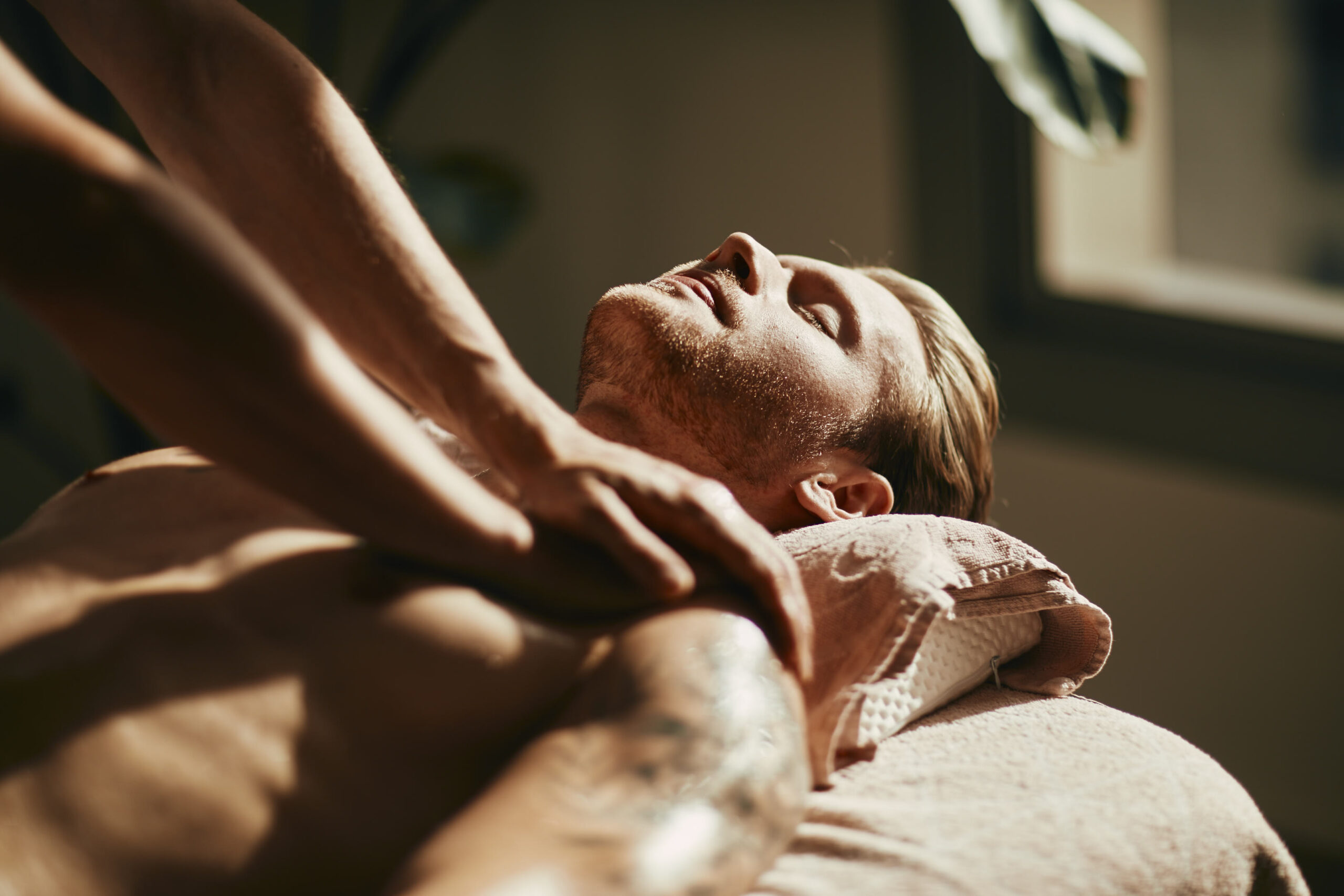
Deep tissue massage works on the deeper layers of muscle where chronic tension lives. If you have been tight in the same spot for months or years this is often the approach that finally shifts it. I use strong pressure to break up adhesions (sticky spots where muscle fibres have bound together) and restore proper movement.
Sports massage focuses on keeping you training without breaking down. Before an event it helps prepare your muscles. After training it speeds up recovery and reduces that sore feeling you get a day or two later. Many athletes use it weekly during heavy training blocks.
Thai massage combines deep pressure with stretching. If you feel stiff and restricted this approach opens up your body in ways that feel amazing. You leave feeling energised and loose rather than sleepy.
Relaxation massage addresses the mental side of recovery. When your nervous system is constantly in stress mode your body cannot recover properly. Sometimes what you need most is deep relaxation so your system can shift into repair mode.
How often should you get a massage?
This depends on how hard you train and what your body needs. Here is a rough guide:
Training 4-6 times per week: Every 1-2 weeks during heavy training periods. Monthly during maintenance phases.
Training 2-3 times per week: Every 2-4 weeks works well for most people.
Desk worker with occasional exercise: Monthly sessions keep problems from building up.
Dealing with a specific issue: Start with sessions closer together (weekly or fortnightly) until it resolves. Then move to maintenance.
The key is consistency. One massage when you are in pain helps. Regular massage prevents the pain from coming back.
Making 2026 your strongest year
Here is my challenge for you this January. Instead of adding more workouts to your schedule add recovery.
Keep one day per week completely free of training. Book a massage at least once this month. Pay attention to sleep and give your body time to repair.
The people who stay fit long-term are not the ones who train hardest. They are the ones who train smart and recover properly.
If you are ready to make recovery part of your 2026 fitness plan I would love to help. I work from my space in Barcelona’s Eixample neighbourhood and speak English, Spanish, French and Catalan.
Book your session here and let’s start the year with your body feeling its best.
Julien is a certified massage specialist with 15+ years experience. He trained in France and completed Traditional Thai massage certification at TMC Chiang Mai. His practice Under Pressure Massage Barcelona is located in Eixample and serves athletes, fitness enthusiasts and professionals across the city.