You moved to Barcelona for the lifestyle. The beach after work. Coffee in sunny plazas. A city that actually lives instead of just rushing.
But here you are, hunched over a laptop at your coworking space, neck screaming at you while the Mediterranean waits outside. Sound familiar?
I’m Julien and I work with remote professionals across Barcelona every week. From digital nomads at Aticco and Betahaus to tech workers at startups in Poblenou, I see the same problems over and over. This guide will help you work smarter and feel better while building your life in this incredible city.
Why your body hates your laptop
Here is a number that might surprise you: 65% of desk workers develop muscle and joint pain. That is most people who work at computers for a living.
Your body was designed to move. Hunting, gathering, walking for miles. It was not designed to sit in the same position for 8 hours staring at a glowing rectangle.
When you sit at a laptop your head moves forward to see the screen. This is called forward head posture or «tech neck.» For every inch your head moves forward your neck muscles work twice as hard to hold it up. By the end of a workday those muscles are exhausted.
Add in rounded shoulders from typing, tight hip flexors from sitting and a lower back that gets zero support from most cafe chairs. Your body is fighting gravity in all the wrong ways.
The four pain patterns I see most often
Tech neck and tight shoulders
This is the classic laptop problem. Your screen is too low so your head drops forward. Your shoulders round in to reach the keyboard. After a few hours (or months) this becomes your default posture even when you are not working.
You might notice headaches that start at the base of your skull. Stiffness when you try to look over your shoulder. A constant ache between your shoulder blades that never quite goes away.
Lower back pain from sitting
When you sit your hip flexors (the muscles at the front of your hips) shorten. Your glutes switch off because they are not needed. This creates a tug of war with your lower back caught in the middle.
The longer you sit the worse it gets. Standing up feels stiff. Walking loosens things temporarily but the pain returns as soon as you sit back down.
Wrist and forearm tension
Typing and mouse work puts your hands in the same position for hours. The small muscles in your forearms get overworked. You might feel tightness, tingling or weakness in your hands.
This one often sneaks up on people. It starts as mild fatigue and slowly builds until it affects your ability to work.
Stress that lives in your body
Remote work comes with its own pressures. Time zone juggling. Video calls where you perform for the camera. The isolation of working alone even in a room full of people.
That stress does not just live in your head. It settles into your jaw, your neck, your shoulders. Many people carry tension they are not even aware of until someone works on those areas.
What actually helps (and what does not)
Standing desks help a little
Alternating between sitting and standing is better than sitting all day. But standing in one place creates its own problems. The key is movement, not just position changes.
Ergonomic setups matter
If you work from home or have a fixed desk at a coworking space, proper setup makes a real difference. Screen at eye level. Keyboard and mouse at elbow height. Chair that supports your lower back.
But most remote workers in Barcelona do not have perfect setups. You are working from cafes, shared desks and kitchen tables. You cannot control every environment.
Stretching helps if you actually do it
Most people know they should stretch. Few people do it consistently. A 30 second shoulder roll between tasks is better than nothing but it will not undo 8 hours of laptop damage.
Regular massage changes everything
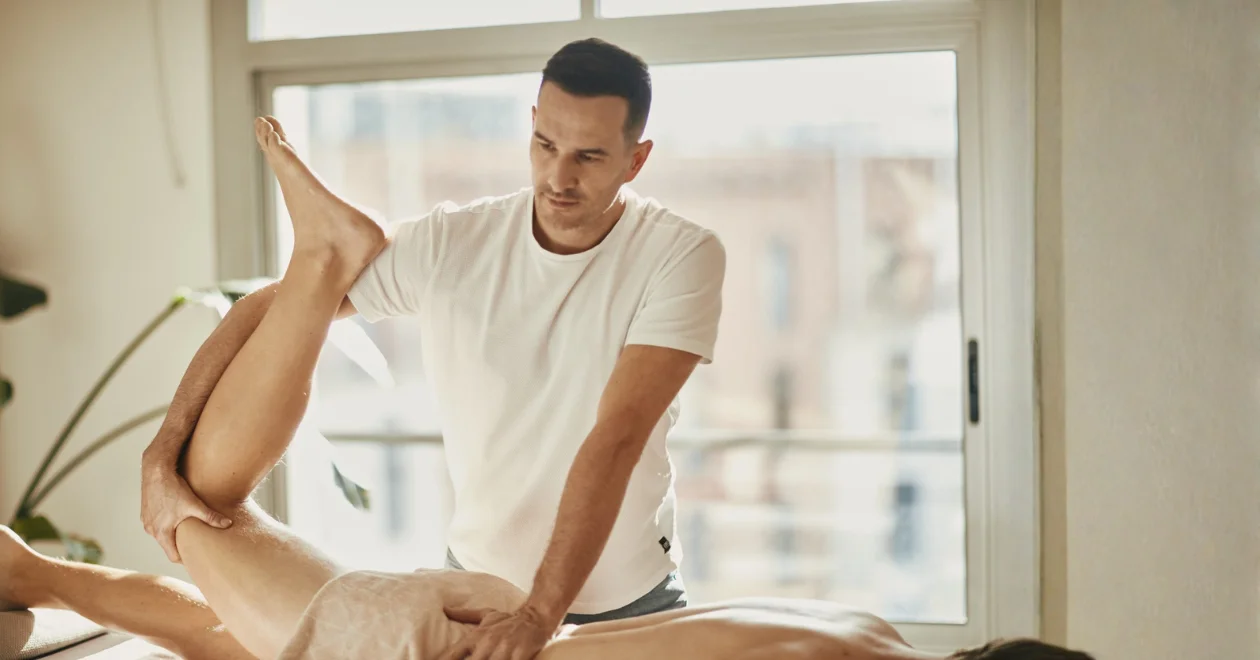
This is where I can help. Deep tissue massage reaches the layers of muscle that get chronically tight from desk work. I can find and release tension that you cannot reach with stretching or foam rollers.
Unlike a gym session or a yoga class, massage does not require your effort. You show up, lie down and let someone else do the work of unwinding your body. For busy professionals who are already mentally exhausted, this matters.
What works for different types of desk workers
If you work from coworking spaces
The variety is both good and bad. Different chairs and setups stop you from locking into one position. But the lack of consistency means you never optimize anything.
Focus on what you can control: take breaks, walk between calls and book regular massage sessions to reset your body. Sports massage works well if you also train at the gym. Relaxation massage helps if stress is the main issue.
If you work from home
You have more control over your setup but less reason to move. It is easy to go from bed to desk to couch without leaving your apartment.
Build movement into your day. Walk to get coffee even if you have a coffee machine. Take calls standing up. And schedule massage appointments like meetings because otherwise you will keep putting them off.
If you are new to Barcelona
The transition period is tough on bodies. Long flights, jet lag, setting up a new space. You are sleeping in unfamiliar beds and sitting in unfamiliar chairs while trying to maintain your work output.
Many of my clients book a session in their first few weeks to reset after the move. Thai massage works especially well here because it combines stretching with deep pressure. You leave feeling like your body has been put back together properly.
Building a routine that lasts
Here is what I recommend for remote workers who want to stay pain-free long term:
Daily: Get up from your desk every hour even if just to refill water. Do 2 minutes of shoulder and neck stretches.
Weekly: One proper exercise session that involves movement in multiple directions. Swimming, yoga or a gym class all work.
Monthly: Book a massage session. For most desk workers this is enough to catch tension before it becomes chronic. If you have existing pain you might need sessions closer together until it resolves.
The goal is prevention not crisis management. One massage when your back gives out helps. Regular sessions stop it from giving out in the first place.
Why Barcelona is worth protecting your body for
You did not come here to spend your evenings on the couch because your back hurts too much to walk to the beach.
Barcelona offers a lifestyle that most cities cannot match. But that lifestyle requires a body that works. Taking care of it is not a luxury. It is what makes everything else possible.
I work from my space in Eixample, right in the heart of the city. Whether you are based at Aticco down the street, working from El Born or commuting from Poblenou, I am easy to reach by metro or on foot.
I speak English, Spanish, French and Catalan so we can communicate clearly about what your body needs.
Book your session here and give your body the attention it deserves.
Julien is a certified massage specialist with 15+ years experience helping remote workers and professionals in Barcelona. His practice Under Pressure Massage Barcelona is located in the Eixample district near Plaça Universitat.